
Roco Kingdom Type Chart: How Matchups Actually Work
Roco Kingdom type matchups explained without a giant table: the 18-class wheel, coverage building, energy costs and the mistakes that lose games.
Roco Kingdom uses an 18-class elemental ecosystem. The full chart belongs in the game's dex, not in a six-column table that goes stale after the first balance patch. What you actually need is the logic: which matchups are worth building around, when a resist is better than a super-effective hit, and why energy cost can matter more than a damage multiplier.
This page explains that logic. For the complete per-class table, use the in-game dex or the companion wiki's chart page; this guide stays on the decision layer.
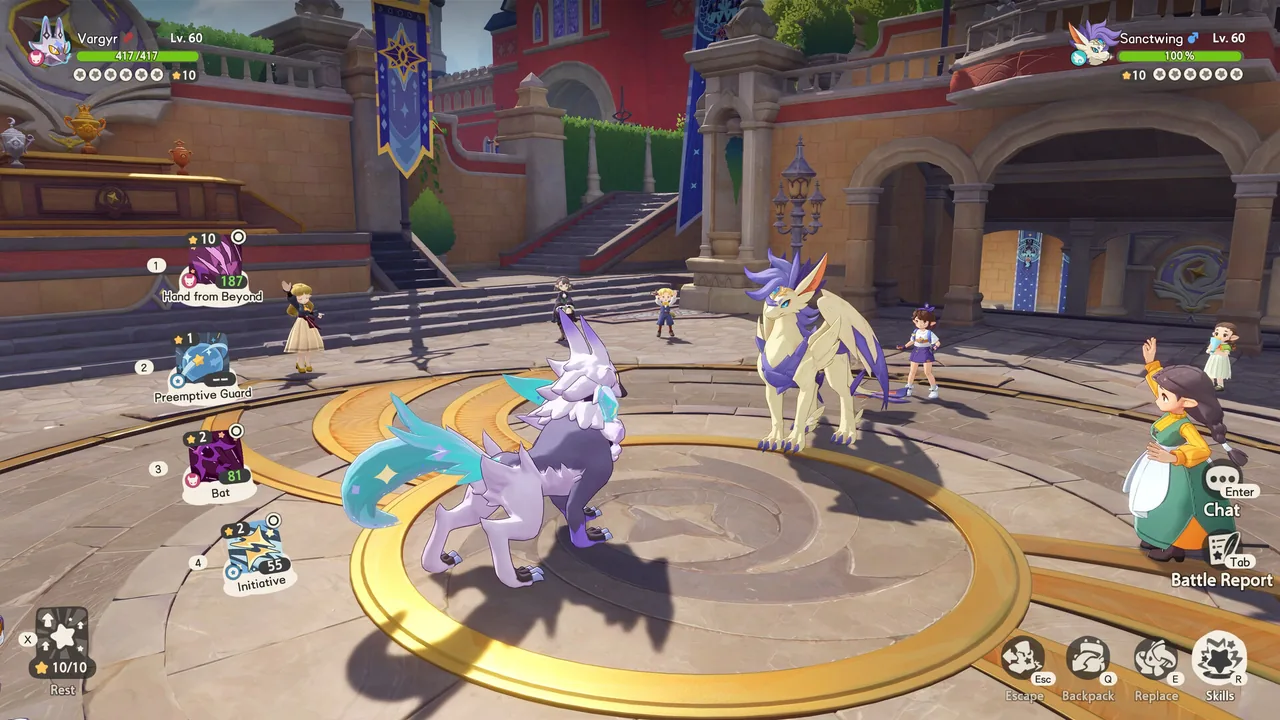
The part you must memorize
The basic triangle is:
- Fire beats grass.
- Grass beats water.
- Water beats fire.
Everything else is context. The triangle is enough to make a sensible starter choice and to avoid the worst matchup in the first ten hours. It is not enough to build a PvP team, because the 18-class wheel has many more interactions and the global beta can adjust them.
Knowing that a hit is super effective does not tell you whether to click it. If the super-effective skill costs most of your energy and leaves you unable to attack next turn, a cheaper neutral skill can be the better play.
Attack, defense and status are a second layer
The official combat messaging describes an interaction between attack, defense and status skills that behaves like a second rock-paper-scissors layer. This is separate from elemental type advantage.
In practice:
- An attack skill pressures the opponent's health.
- A defense skill can blunt a predictable attack and preserve energy.
- A status skill changes the rules of the next few turns.
A team that only brings attacks wins the first exchange and loses the second. A team that only brings defense and status runs out of damage before the opponent runs out of mana. The best team guide turns this into slot roles.
Resist or counter?
A resist is a Jinie that takes less damage from a type. A counter is a Jinie that both takes less and threatens the opponent back.
Counters are better, but they are also more expensive to build because they need the right stats and skills. In the early game, use resists to survive and save your rare resources for one real counter to the type that beats your core.
The counters guide covers the archetype-level answers: anti-burst, anti-stall, anti-weather and anti-speed.
Coverage: three damage types is the target
A six-Jinie team does not need six damage types. It needs enough coverage that a single resist cannot wall the whole team.
A practical target:
- One primary damage type for your carry.
- One secondary type that hits the common resists of your primary.
- One emergency type on a support or tank, so you are not helpless after a bad lead.
Do not add a third damage type by cutting your support. Coverage without sustain is a coin flip against any bulky team.
Energy cost changes the chart
A super-effective skill that costs four energy is not automatically better than a neutral skill that costs one. The expensive hit can win the turn and lose the next two.
When you compare two options, ask:
- Does this knockout now, or set up a knockout next turn?
- If it does not knockout, can I still act next turn?
- Does the opponent have a switch that makes this hit irrelevant?
That is why "best type coverage" lists are misleading. The best click depends on the energy bar, the opponent's remaining Jinies and the switches they have left.
Weather and field effects
The Chinese version allows certain Jinies to change the weather, and weather can boost matching skills. Community testing reports a 50% water damage bonus in rain, but that number is CN-version specific and unconfirmed for the global beta.
What transfers is the principle: weather is a multiplier on a plan, not a plan by itself. A weather team needs a setter, an abuser and a backup setter. Without the backup, one knockout ends the strategy.
Building coverage in five minutes
Use this checklist before you enter a boss or a ladder game:
- List your three main damage types.
- Name the type that resists each one.
- For each resist, point to the Jinie on your team that can beat it.
- If you cannot name one, that is your flex slot.
- If two resists share the same answer, you have a structural weakness.
This is faster than memorizing 18 rows and more useful than copying a chart from a video.
Common matchup mistakes
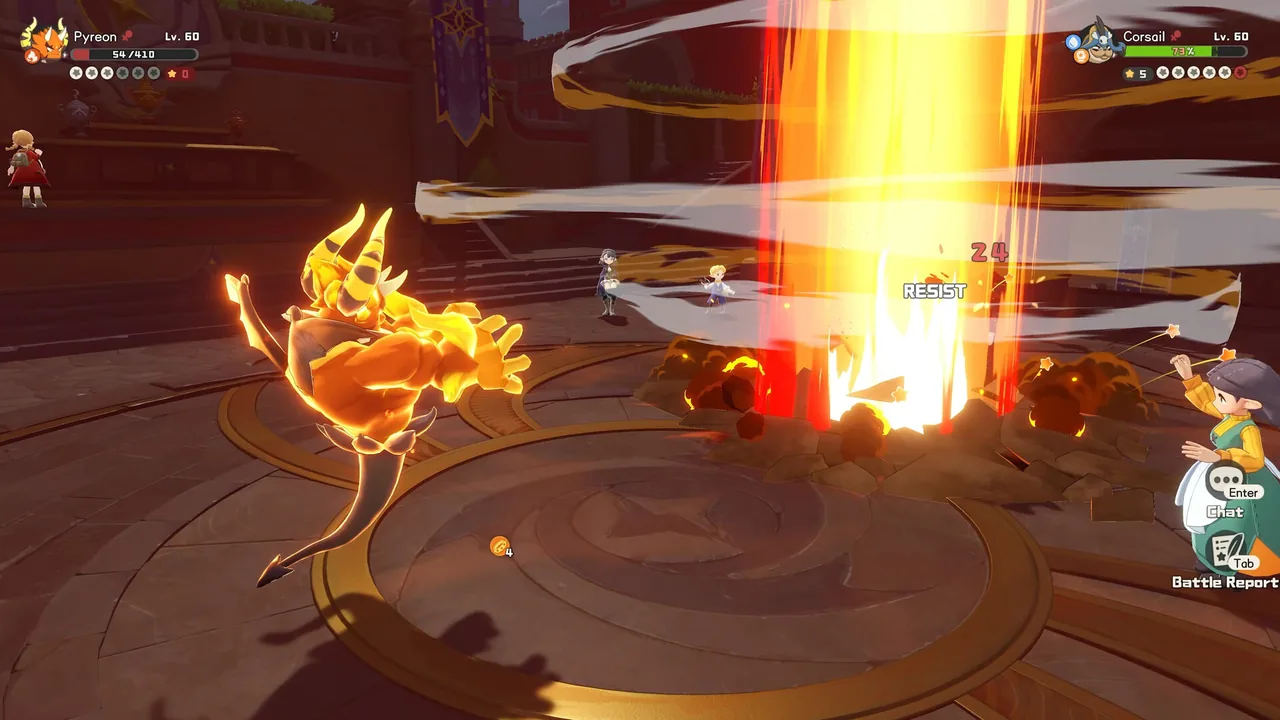
- Treating a super-effective hit as a guaranteed knockout. Bulk, levels and defensive skills all change the math.
- Ignoring the switch. The opponent can leave a bad matchup; your coverage only matters if you can punish the switch.
- Building for the mirror. Beating your own team is not the same as beating the field.
- Overreacting to one loss. A single bad matchup is not a reason to rebuild six slots.
- Using a CN chart as gospel. The global beta can change multipliers, and the launch build can change them again.
Where to go next
The best team guide covers coverage; the counter guide covers defensive answers; the boss guide shows where shields change the math.
Sources
Companion wiki
For the full 18-element chart behind this guide, use the Roco Kingdom Wiki. It holds the full reference tables; this site stays focused on decisions and routes.
FAQ
How many types are in Roco Kingdom? Eighteen classes in the Chinese version. The global beta uses the same elemental framework.
Is there a dual-type system? The Chinese version's dex is organized around 18 classes, but a Jinie's full typing can include more than one element. Check the individual dex entry rather than assuming a single type.
What is the strongest type? None. Matchups are cyclical, and energy cost, speed and team support decide more fights than raw type advantage.
Where is the full type chart? In the in-game dex and on the companion wiki. This site deliberately does not duplicate the full table because it changes with patches.
Official source: Roco Kingdom official site — combat system overview and beta announcements. See also the Steam page.
More Roco Kingdom Guides
How Roco Kingdom co-op works: friend requirements, shared gathering and combat XP, home visits, blessing eggs and the etiquette that keeps groups together.
Counter Roco Kingdom's burst, stall, weather, speed and lifesteal teams with role-based answers, safe switches and a mana-first game plan.
A repeatable Roco Kingdom daily loop for 10, 20 or 45 minutes: academy tasks, home commissions, rare seeds, bosses and breeding upkeep.
Roco Kingdom's endgame loop: awakening, bloodline projects, PvP, weekly bosses, breeding and the one-week plan that keeps progress moving.
Navigate Carosia efficiently: region order, tower and teleport unlocks, mount upgrades, weather statues and the exploration loop that pays.
Earn Roco Kingdom coins efficiently: one-time coin drawers, repeatable pickup routes, daily commissions and the purchases worth saving for.
Official Roco Kingdom PC and mobile requirements, plus the settings to change first for a stable frame rate in the global beta.
What to prioritize at every Roco Kingdom level band, from the first hour to the level 30 home unlock and the 40+ awakening grind.